A founder in Jaipur has a working prototype, twelve paying customers and an investor who says, “Come back when you’re Series A ready.” She nods, then quietly Googles what that means.
I’ve seen this a lot. Nobody explains the startup funding stages properly, so founders pitch the wrong investor for the wrong amount at the wrong time. Here’s a plain walkthrough of each stage, what Indian rounds look like in 2026, and what investors expect before they write a cheque.
What Are Startup Funding Stages?
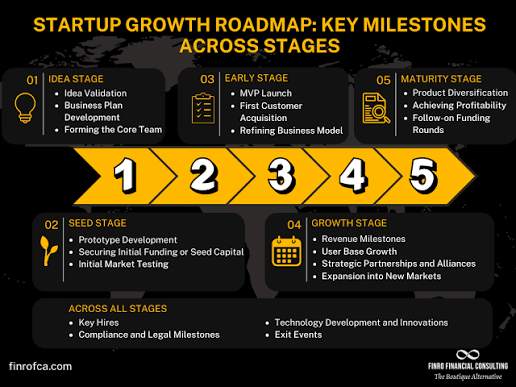
Startup funding stages are the rounds a company moves through as it grows: pre-seed, seed, Series A, Series B, Series C and beyond. Each round matches the company’s maturity. Early rounds fund ideas and prototypes, while later rounds fund scaling, new markets and sometimes a path to IPO. Investors, round sizes and expectations change at each step.
Think of it like school. You don’t skip from class 1 to class 12, and you can’t pitch a growth round with a half-built product.
Pre-Seed: Turning an Idea Into Something Real
Pre-seed is the “prove it’s not crazy” stage. You might have a prototype, a few test users or just a strong team.
Money mostly comes from founders, friends and family, angels, accelerators and a few micro-VCs. One 2026 estimate puts Indian pre-seed rounds at roughly ₹1 to 4 crore, though plenty of founders raise much less.
At this point investors back you more than the numbers. Can you build? Do you understand your customer? Honestly, a founder who has talked to 50 customers beats one with a beautiful deck.
Seed Stage: Finding Product-Market Fit
Seed money helps you build the product properly, hire a small team and find your first real customers.
At the seed stage, startups typically raise between ₹4 crore and ₹12 crore from angels, seed funds and early VCs. Investors want early traction, such as growing users or revenue, along with a clear plan. Founders usually give up around 15 to 25 per cent equity.
The funding mood matters here. India’s Q3 2026 deal count fell 13% year on year while the median ticket size stayed flat at $3 million, which suggests investors are choosier. Seed rounds exist, but you need real signals, not just a story. inc42
Series A: Proving the Model Works
Series A is where many startups stall, so listen up.
You’ve found product-market fit. Now investors want to see that you can repeat it: predictable revenue, healthy retention and a team that can scale. Funds like Peak XV, Lightspeed and Nexus often lead these rounds.
The median disclosed Series A round in India is about $6 million, with the middle half of rounds between $4.4 million and $12 million. That’s roughly ₹40 to ₹100 crore, depending on the exchange rate. fundediq
A common mistake: raising Series A “because seed money is running out.” Investors can smell that. Raise it when metrics justify it.
Series B: Scaling What Works
Series B is about growth. You enter new cities, hire more people, build more product and fight competitors harder.
Round sizes usually move into the tens of millions of dollars, and investors expect strong unit economics, not just growth. Burning cash to buy customers worked in 2021. In 2026, it’s much harder to sell.
Picture a Jaipur-born B2B company serving 200 retailers. At Series B, the question isn’t “do customers like us?” It’s “can we reach 2,000 retailers profitably?”
Series C and Beyond: Market Leadership and Exit Prep
Series C and later rounds fund expansion into new markets, acquisitions and sometimes new product lines. Investors include large VCs, private equity funds and sovereign funds.
Late-stage funding has been uneven lately. Series C and above declined 10% year on year to $994 million across 27 deals in Q3 2026, and the median late-stage ticket size fell 18% to $18 million. inc42
Companies at this stage usually think about IPOs, acquisitions or secondary sales. Lenskart and Groww, for example, went public after raising several rounds. [link to Lenskart business model case study here]
How Much Equity Will You Give Up?
Each round dilutes your ownership. If you sell 20% at seed and 20% at Series A, you’ve given up over a third of the company before Series B.
That’s not bad if the money grows the pie. But raise only what you need for 18 to 24 months of runway. Raising too much too early can leave you with a high valuation you can’t live up to.
Stage Mistakes Founders Make
- Pitching the wrong investor. A Series A fund won’t write a pre-seed cheque.
- Ignoring runway. Start raising when you have 6 to 9 months of cash, not 6 weeks.
- Chasing valuation over partners. A good investor helps with hiring, customers and the next round.
- Skipping the basics. Get your DPIIT recognition and paperwork ready early. [link to startup registration guide here]
FAQs
What are the main startup funding stages?
Pre-seed, seed, Series A, B, C and later rounds, followed by an IPO or acquisition.
How much does a typical seed round raise in India?
Often ₹4 to ₹12 crore, though amounts vary a lot by sector.
What is the difference between seed and Series A?
Seed funds finding product-market fit. Series A funds scaling a model that already works.
Do all startups need to raise every round?
No. Many stay bootstrapped or skip stages. Zerodha never raised outside venture funding. [link to Zerodha business model case study here]
What do investors look at in Series A?
Revenue growth, retention, unit economics and the team’s ability to scale.
How long between funding rounds?
Typically 18 to 24 months, though it depends on growth and market conditions.
Conclusion
The startup funding stages are a ladder: pre-seed for ideas, seed for product-market fit, Series A for repeatable growth, Series B for scaling and Series C onward for market leadership. Each stage has different investors, expectations and risks.
Before you pitch anyone, work out where you actually stand. Write down your revenue, users and runway, then match them to the stage descriptions above. That one exercise tells you whether to raise now, wait or stay bootstrapped.
Internal linking suggestions:
- [link to Lenskart business model case study here], in the Series C section
- [link to startup registration guide here], in the mistakes section
- [link to Zerodha business model case study here], in the FAQs
Image alt text suggestions:
- “Ladder diagram showing startup funding stages from pre-seed to Series C”
- “Founder pitching to investors at an early-stage startup funding meeting in India”
- “Table comparing typical round sizes across startup funding stages in India 2026”