A Jaipur block-print seller spends ₹15,000 on Instagram ads. Thousands of people see them, a few hundred click, and only two buy. She decides ads “don’t work” and stops.
But ads weren’t the problem. Her funnel had leaks she couldn’t see. Once you understand marketing funnel stages, you can tell exactly where customers drop off and fix that one spot instead of throwing money at the whole thing. Here’s how it works, with real examples.
What Is a Marketing Funnel?
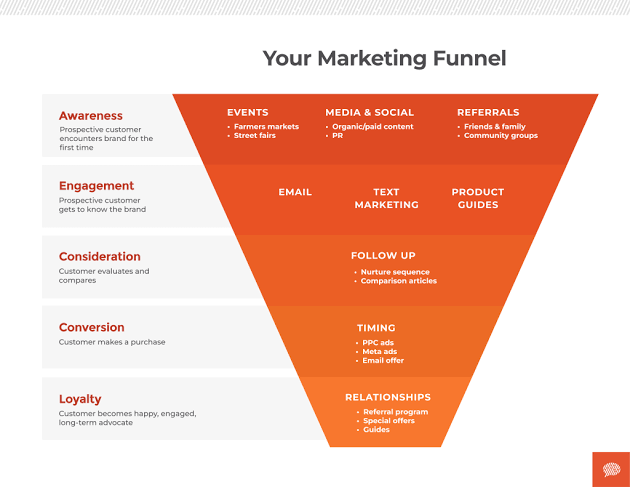
A marketing funnel is a model showing the steps a person takes from first hearing about your business to becoming a loyal customer. It’s called a funnel because many people enter at the top, and fewer remain at each later stage. Understanding the stages helps you decide what to say, where and when.
Nobody buys a ₹5,000 product after seeing one ad. People need to notice you, trust you and compare you first. The funnel just gives names to that journey.
The Marketing Funnel Stages at a Glance
Models differ, but most include five marketing funnel stages:
- Awareness. People discover you exist.
- Interest. They want to learn more.
- Consideration. They compare you with alternatives.
- Conversion. They buy, sign up or book.
- Retention and advocacy. They come back and recommend you.
Marketers also call the first stages top, middle and bottom of funnel. Same idea, different labels. I’d say don’t get stuck on terminology. Focus on what the customer is thinking at each point.
Stage 1: Awareness
At the awareness stage, people don’t know you yet, or don’t know they have a problem. Your job is to be seen by the right audience with helpful, easy-to-digest content such as videos, social posts, search-friendly articles or word of mouth. Don’t push for sales here.
Zerodha is a good example. Its Varsity platform offers free stock market lessons, which attract beginners long before they open an account. People learn, trust the brand and remember it. [link to Zerodha business model case study here]
Useful metrics: reach, impressions, website visits and social followers.
Stage 2: Interest
Now people are curious. They’ve seen you and want more.
Give them reasons to stay: a useful newsletter, a free guide, a short video series, a WhatsApp catalogue. Ask for a small commitment like an email or phone number, but only if you give something in return.
Back to our block-print seller. At this stage she might share a short reel on how block printing is done, with a link to her catalogue. People who watch are warm leads, not just scrollers.
Metrics: email signups, video watch time and click-through rates.
Stage 3: Consideration
This is where buyers compare. They check reviews, prices, delivery times and alternatives.
Help them decide. Show customer testimonials, comparison charts, FAQs and clear policies. Offer samples or trials where possible. Lenskart does this well with free eye tests and home visits. The company conducted 23.8 million eye tests in FY26 while selling 35.3 million units of eyewear, which shows how test-first journeys can lead to sales. [link to Lenskart business model case study here] multibagg
Metrics: demo requests, product page visits, repeat visits and enquiries.
Stage 4: Conversion
The customer is ready. Don’t make it hard.
Remove friction: simple checkout, UPI and cash on delivery options, clear pricing, quick responses on WhatsApp. A limited-time offer can help, but only if it’s honest. Fake urgency destroys trust.
Many sales die here for silly reasons: a slow payment page, no reply to a query or hidden delivery charges. Test your own checkout as a customer sometimes. I’ve seen businesses lose orders for weeks without noticing.
Metrics: conversion rate, cart abandonment, cost per sale.
Stage 5: Retention and Advocacy
The funnel doesn’t end at purchase. It’s cheaper to keep a customer than to find a new one.
Follow up. Say thanks. Ask for feedback. Offer loyalty benefits, reminders or useful tips. Happy customers become your marketing: they share, review and refer.
Lenskart’s Gold membership is one loyalty example, since it encourages repeat buying. And think about your neighbourhood tailor: you recommend them because they remember your measurements and deliver on time.
Metrics: repeat purchase rate, referrals, reviews and customer lifetime value.
A Quick Example for a Small Business
Picture a Jaipur home bakery.
- Awareness: Instagram reels of cakes being decorated
- Interest: A WhatsApp broadcast with festive menu photos
- Consideration: Customer reviews and a small tasting box
- Conversion: Easy ordering by WhatsApp with UPI payment
- Retention: Birthday reminders with a small discount
No big budget. Just matching what you say to where the customer is. [link to home business ideas for women guide here]
Finding the Leaks in Your Funnel
Count people at each stage. For example, 5,000 views, 300 clicks, 40 enquiries, 8 orders. Then look for the biggest drop.
- Many views, few clicks: your content or targeting needs work
- Many clicks, few enquiries: your page or offer isn’t convincing
- Many enquiries, few orders: price, trust or follow-up is the issue
- Few repeat orders: your after-sales experience needs attention
Fix one leak at a time. Changing everything at once tells you nothing.
Common Funnel Mistakes
Selling too early to cold audiences. Ignoring middle-stage nurturing. Forgetting retention. Using the same message for everyone. Measuring only vanity numbers like followers.
Also, funnels aren’t perfectly linear. People jump around, return and leave. Treat the model as a guide, not a rule. [link to sales pitch examples guide here]
FAQs
What are the main marketing funnel stages?
Awareness, interest, consideration, conversion and retention or advocacy, though some models use different names.
What is the difference between TOFU, MOFU and BOFU?
They mean top, middle and bottom of the funnel, roughly covering awareness, consideration and conversion.
Does every business need a marketing funnel?
Yes, in some form. Even a tiny shop moves customers from noticing to buying, whether it’s planned or not.
How do I measure funnel performance?
Track the number of people moving from each stage to the next and the cost of acquiring each customer.
What’s the difference between a funnel and a customer journey?
The funnel focuses on your marketing goals, while the journey describes the customer’s full experience, including non-linear paths.
Is the funnel outdated?
It’s simplified, but still useful for planning content and finding weak spots.
Conclusion
The marketing funnel stages, awareness, interest, consideration, conversion and retention, show you where customers come from and where you lose them. Match your message to each stage, and fix the leakiest one first.
This week, write down the five stages for your own business and the one thing you do at each. Wherever the answer is “nothing,” that’s your next project. Even one new touch, like a follow-up message after purchase, can lift sales without extra ad spend.
Internal linking suggestions:
- [link to Zerodha business model case study here], in the awareness section
- [link to Lenskart business model case study here], in the consideration section
- [link to home business ideas for women guide here], in the small business example section
Image alt text suggestions:
- “Diagram of marketing funnel stages from awareness to retention”
- “Jaipur home baker sharing cake reels on Instagram to attract customers”
- “Funnel report showing drop-off between views, enquiries and orders”